

a hobby-based e-learning platform that connects learners to a community
UX Research
UI/UX Design
Branding
Wireframing
Prototyping
Figma
5 months
(Jun 2022 - Oct 2022)
Improve the way people learn new skills.
Although it's wonderful that there are many ways to learn, there is an overwhelm of choice and lack of motivation.
So this sparked the question...
Why do people want to learn a new skill and when does the lack of motivation hit during the learning process?

Why do people want to learn a new skill?
I led 6 user interviews with participants aged 21-32 who were interested in learning a new skill. I asked questions about their goals and frustrations when it came to online and in-person learning.
Research Questions:
How do you decide what new skill to learn? What factors matter?
Tell me about a time you wanted to learn a new skill and didn’t follow through.
Why do you want to learn a new skill?
How do you usually go about learning a new skill?
How do you feel about starting a new skill to learn?

“I think people around you play a factor in what you learn...and in addition to what you want.”
"My impatience gets in the way of the excitement [of learning a new skill] sometimes - especially if i am not able to utilize the skill yet.”
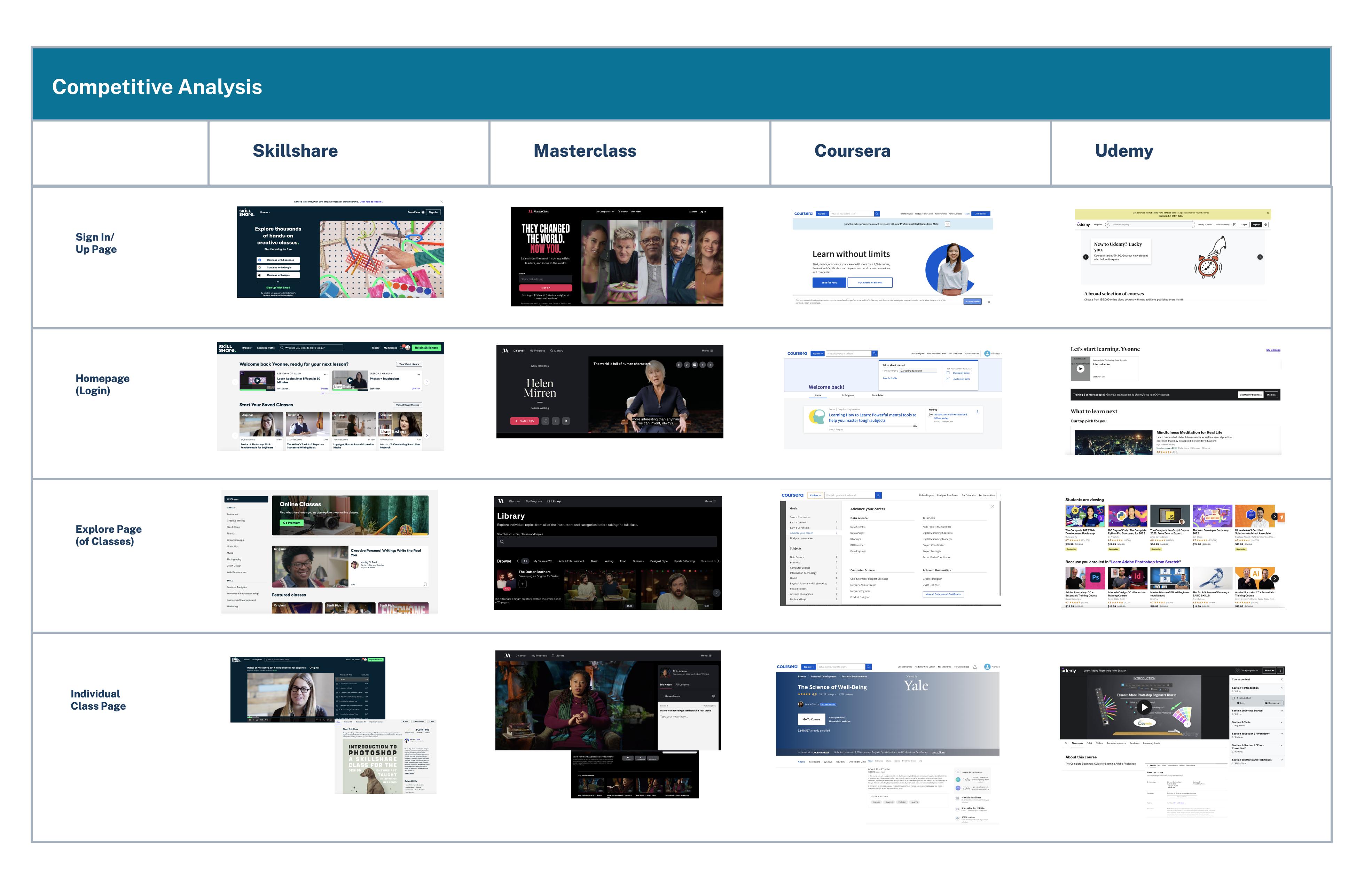
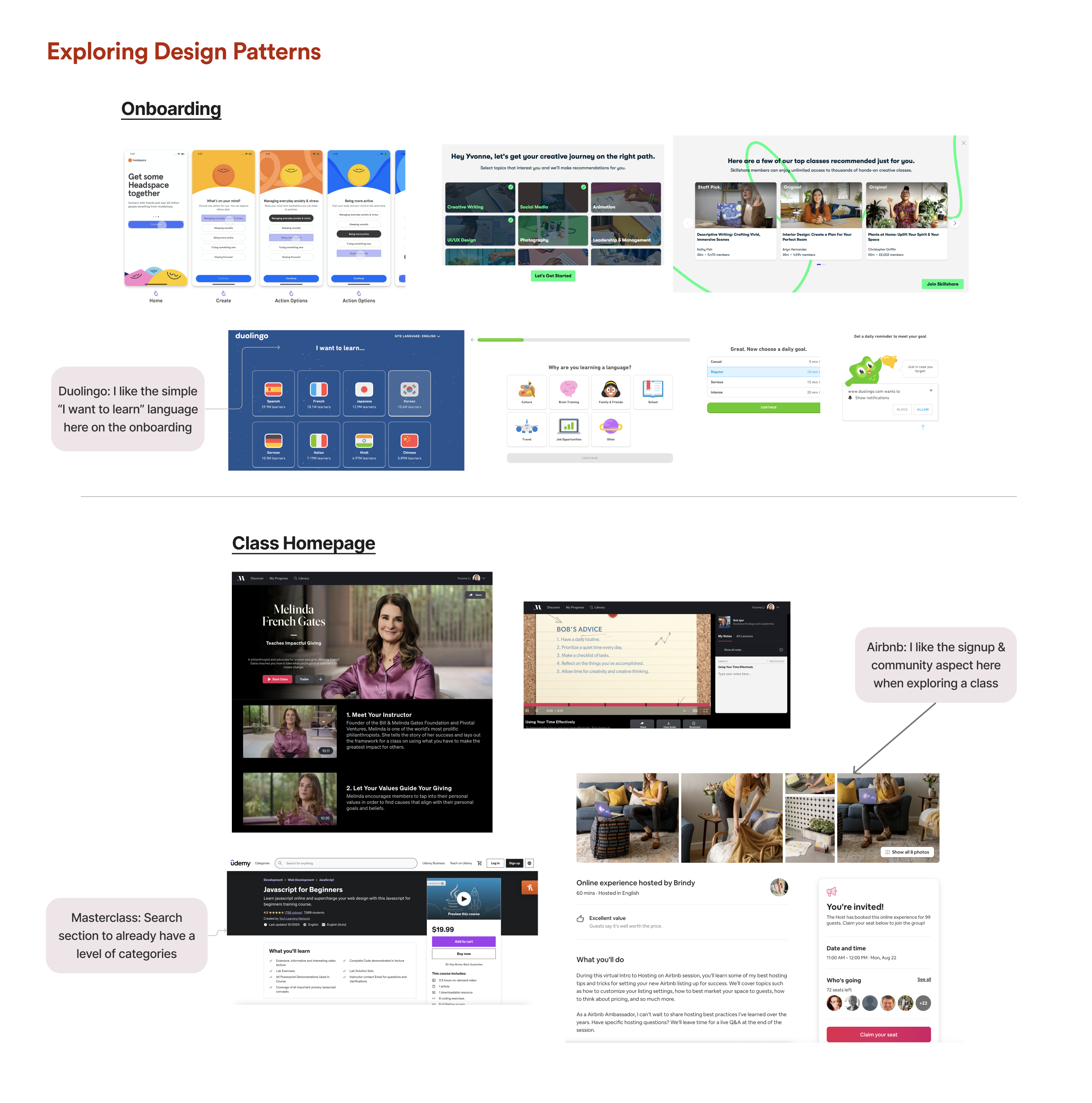
I conducted a competitive analysis focused on the primary players in the e-learning industry.
They varied in strengths and weaknesses and some key takeaways involved:
- Quality of content (Is the material fun and engaging?)
- Reputation of teachers and course (Are they best in class or anyone can be a teacher?)
- Some weaknesses involved overwhelming UI (Too many options, lack of clear direction and identity)


Social connection and peer pressure is important in learning (and deciding) a new skill

People may not start a skill if they don’t know anyone in that field/industry/etc.

People place a higher priority on skills that have extrinsic value (i.e. on-the-job skills) than skills for enjoyment or general interest (i.e. learning a new language)
Current e-learning platforms have 4 key shortfallings:

Social Connection
Learners may lack social connections during the learning process that are vital in their motivation and enjoyment.

Accountability
Without having someone hold them accountable, learners often slack off on their learning progress.

Enjoyability
Learning a new skill can have difficulties if it's a tough to enjoy, the content is boring, or the experience is not as enjoyable.

Accessibility
Learners may not always have the time or money to invest in learning a new skill.
How might we help people interested in learning a new skill build relationships with other learners and experts in the field/skill?
After some thorough analysis, I generated some How Might We Questions and ideas through a brainstorm activity.
...make the learning process fun and enjoyable from start to finish?
...help people interested in learning a new skill feel confident about their decision and learning progress?
...transform learning apps into social connection?
....make completing a skill level be like the Sephora rewards points? (i.e. get a real gift after)?
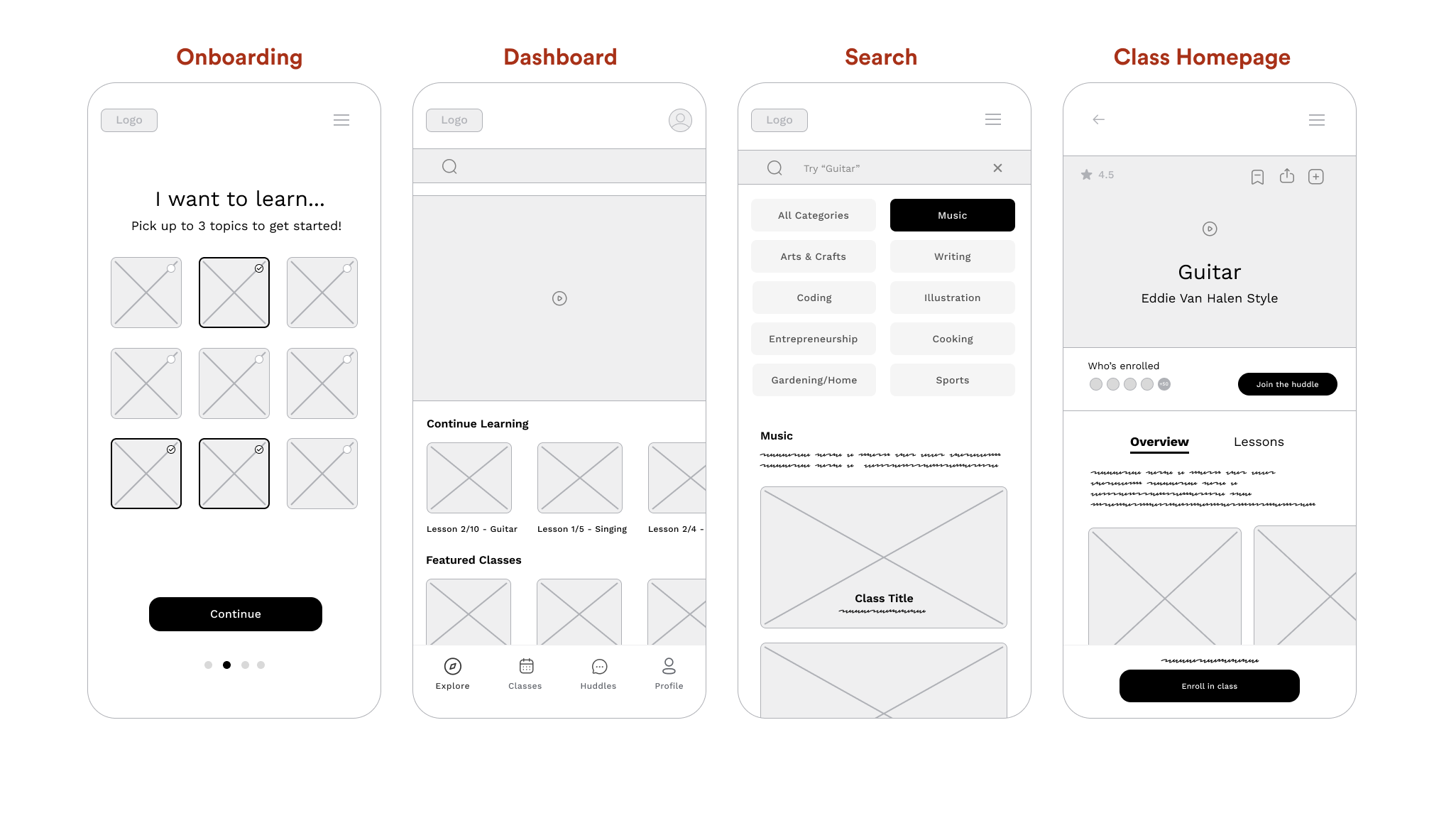
E-learning application where users can easily watch short clips on how to learn hobby-based skills and connect with other learners and experts.
There are several platforms for learning skills for professional development...but what about for fun? For personal enjoyment?
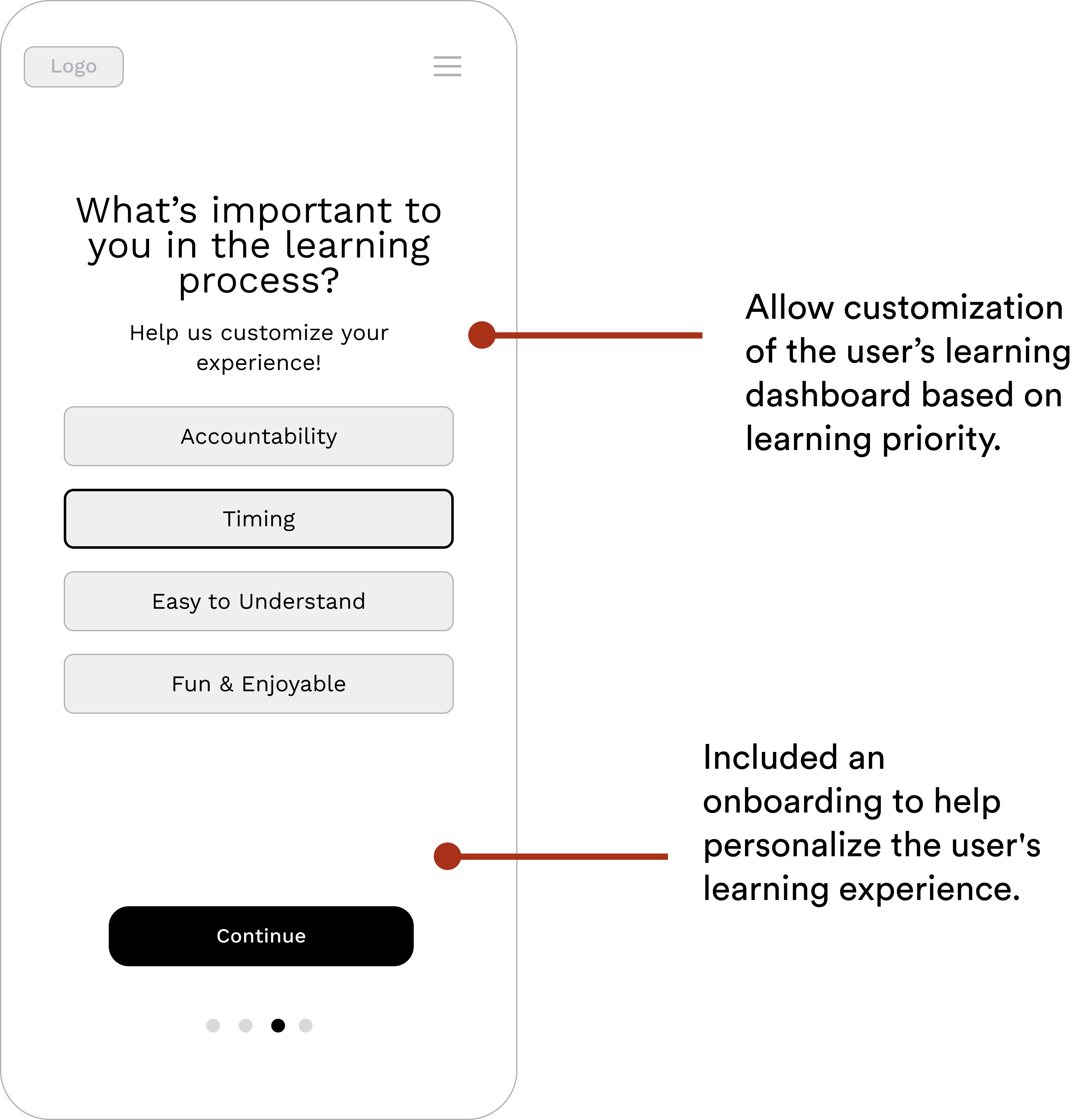
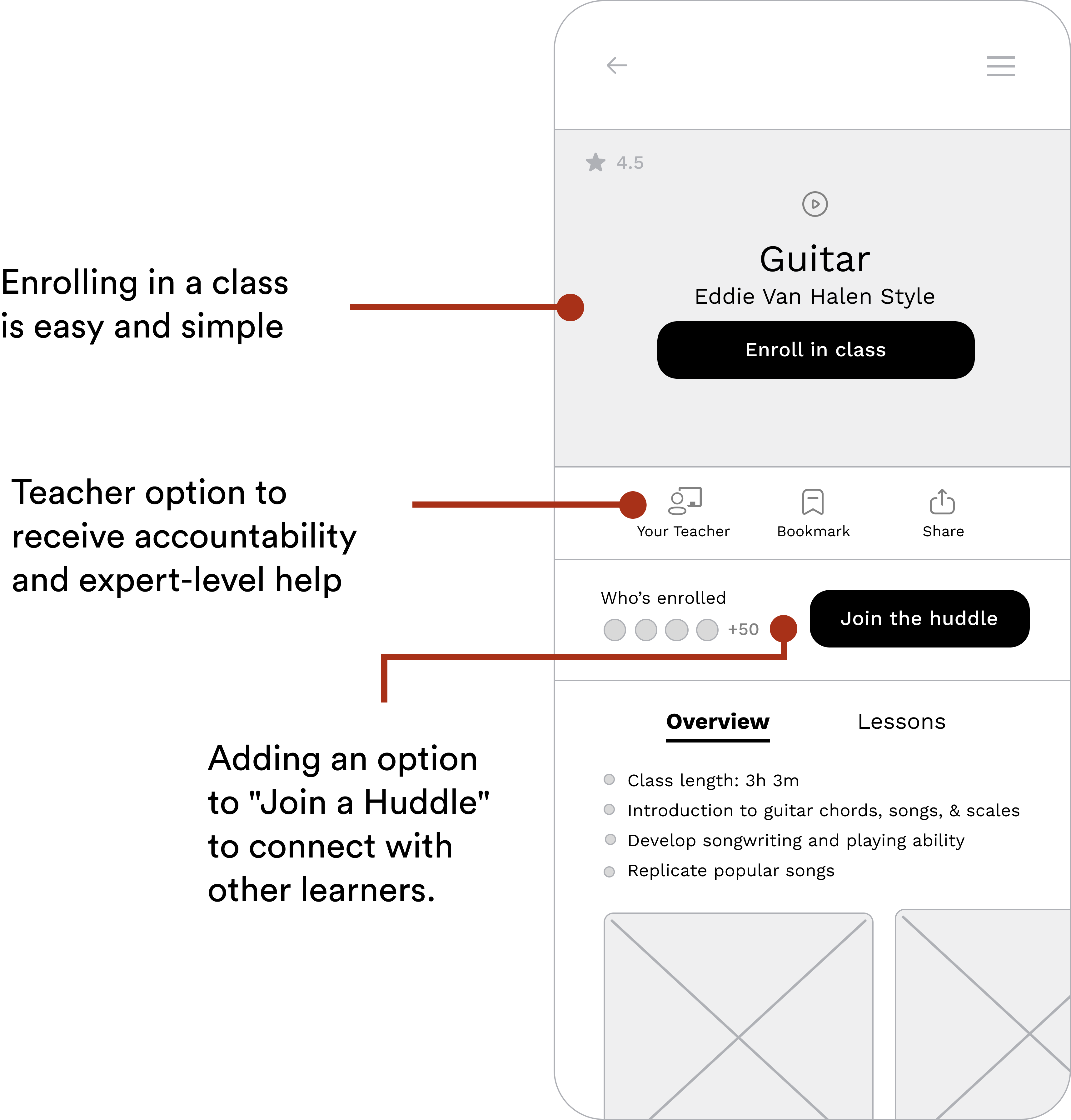
After a fun ideation session, I came up with an idea to help make skills that are typically for enjoyment (such as hobbies) be easily digestible and allow users to be held accountable. I wanted it to customizable to the user's learning priorities and allow users to join communities based on their skills.
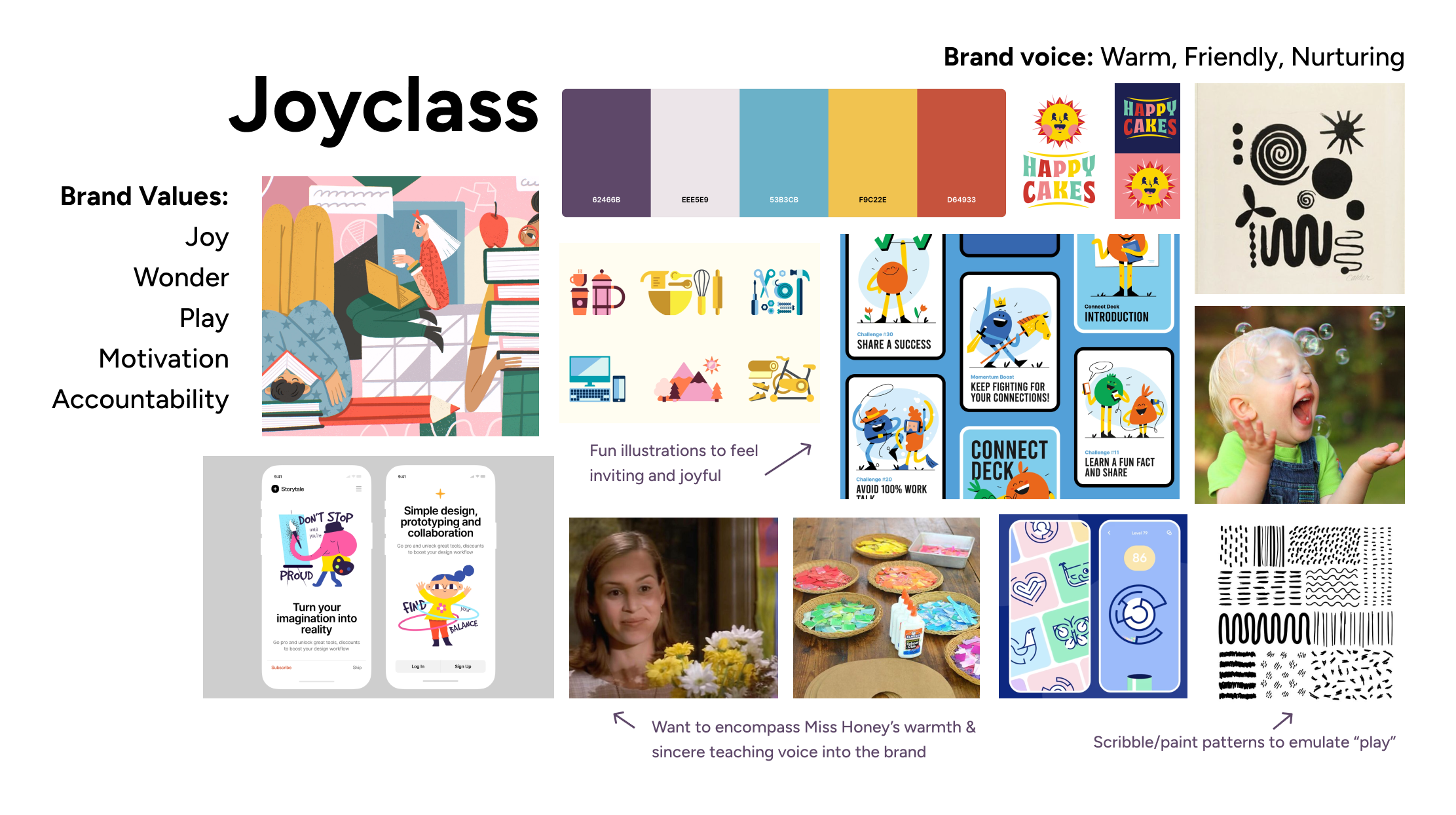
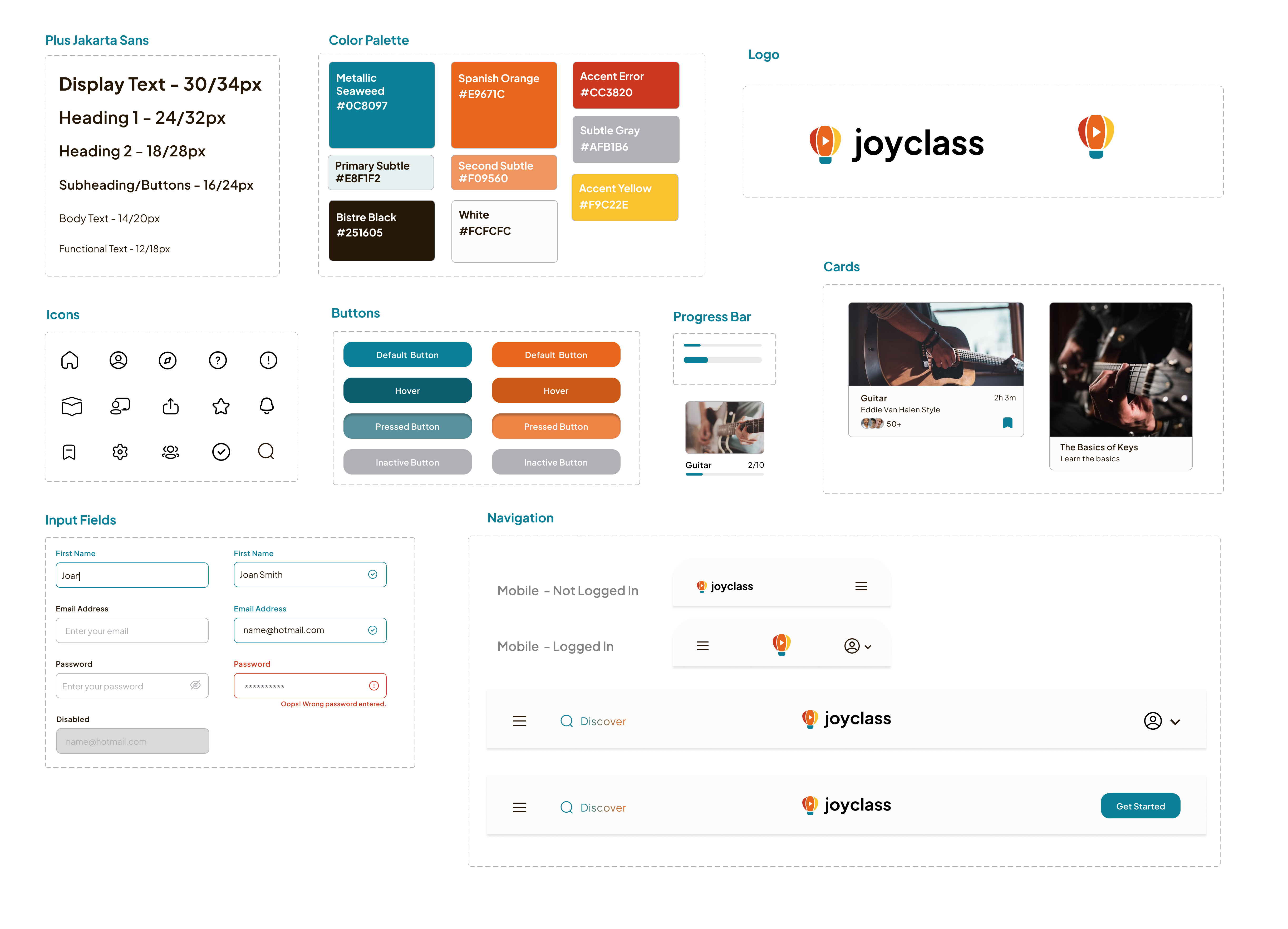
Make learning enjoyable with a fun visual identity.
I developed a brand logo to help communicate the values of the the brand: joy, wonder, and play. This helped improve legibility and enjoyability in the user experience.
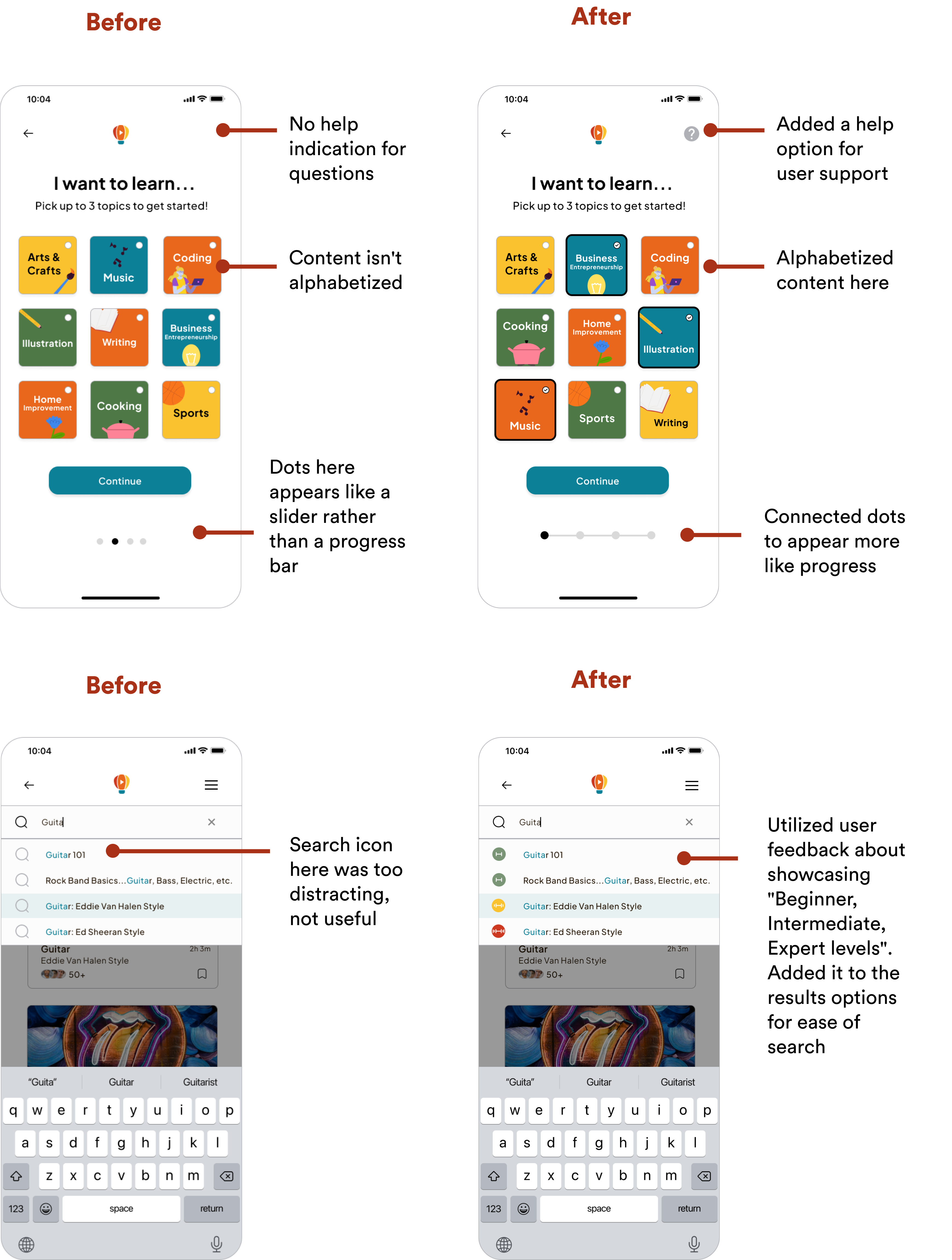
Based on findings from my usability testing and feedback from users, I implemented minor adjustments to two major screens: the onboarding and search. I decided to prioritize action items that had larger impact and supported the business end goals.
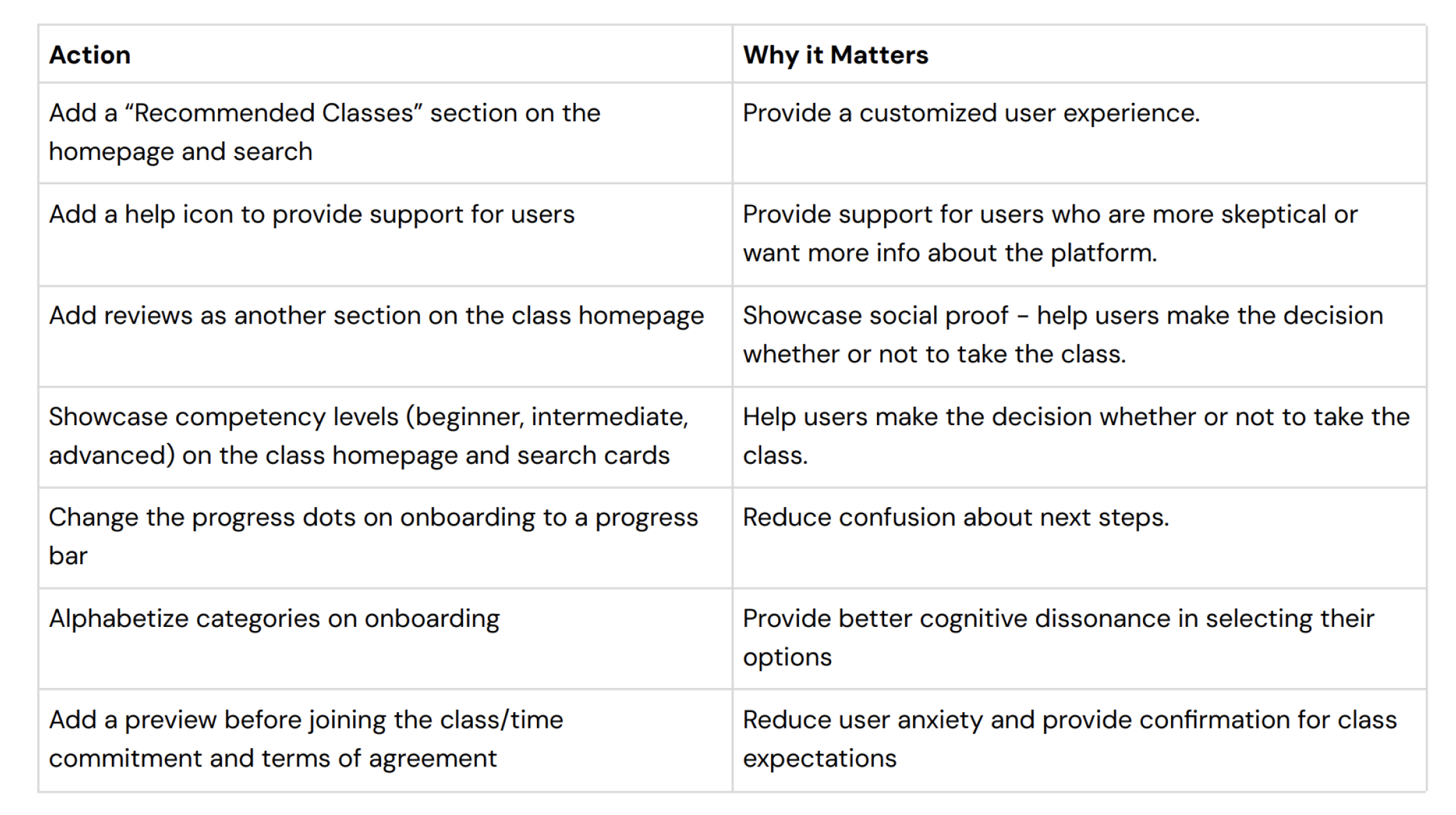
Overall positive feedback from users and iterations included suggestions on business goals.
I led 6 user interviews with the same participants as my initial research. 100% of participants were able to successfully complete user tasks (of onboarding and enrolling in a class) with little to no errors.
Users also gave overall positive feedback on the design’s visual appeal and enjoyability.
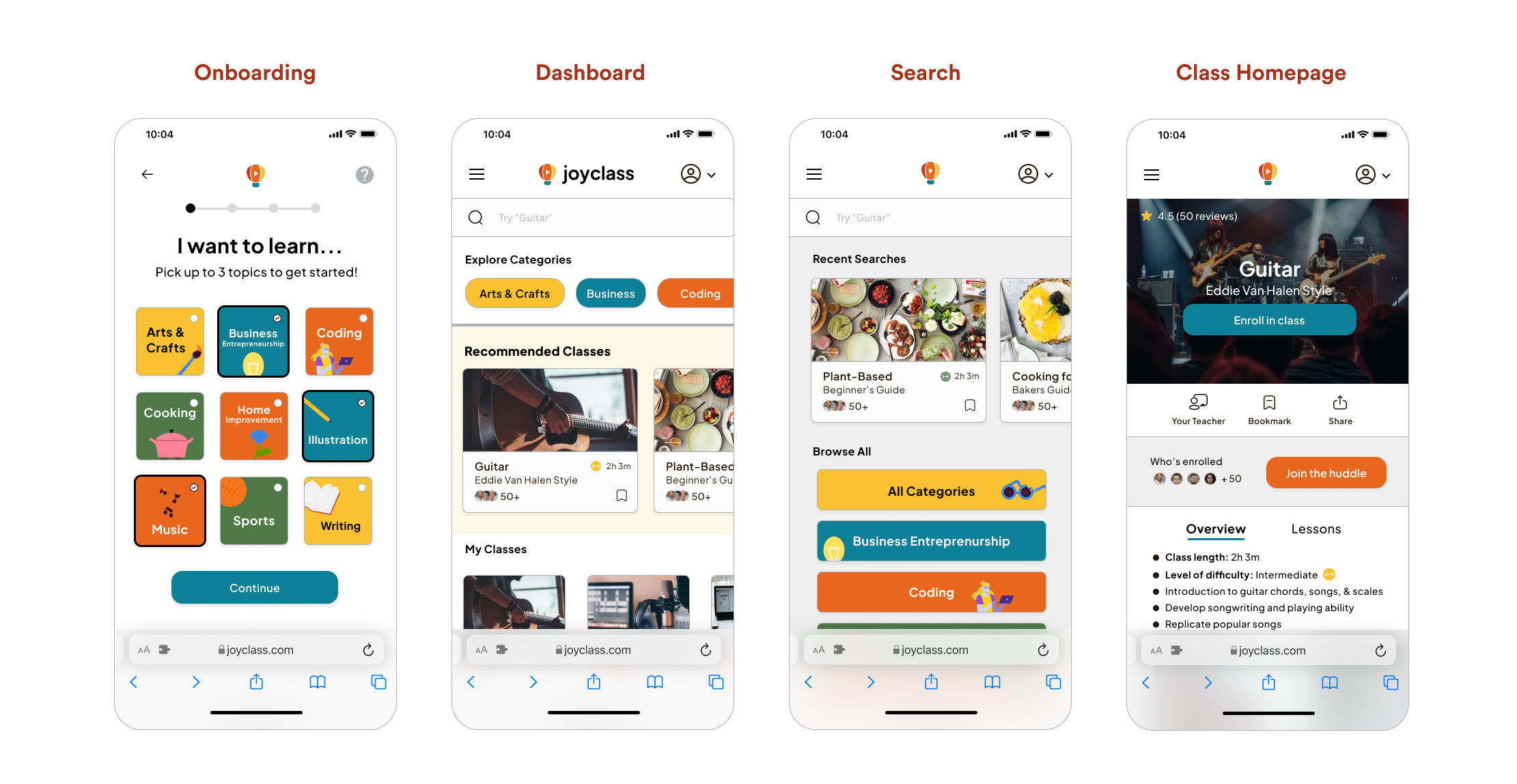
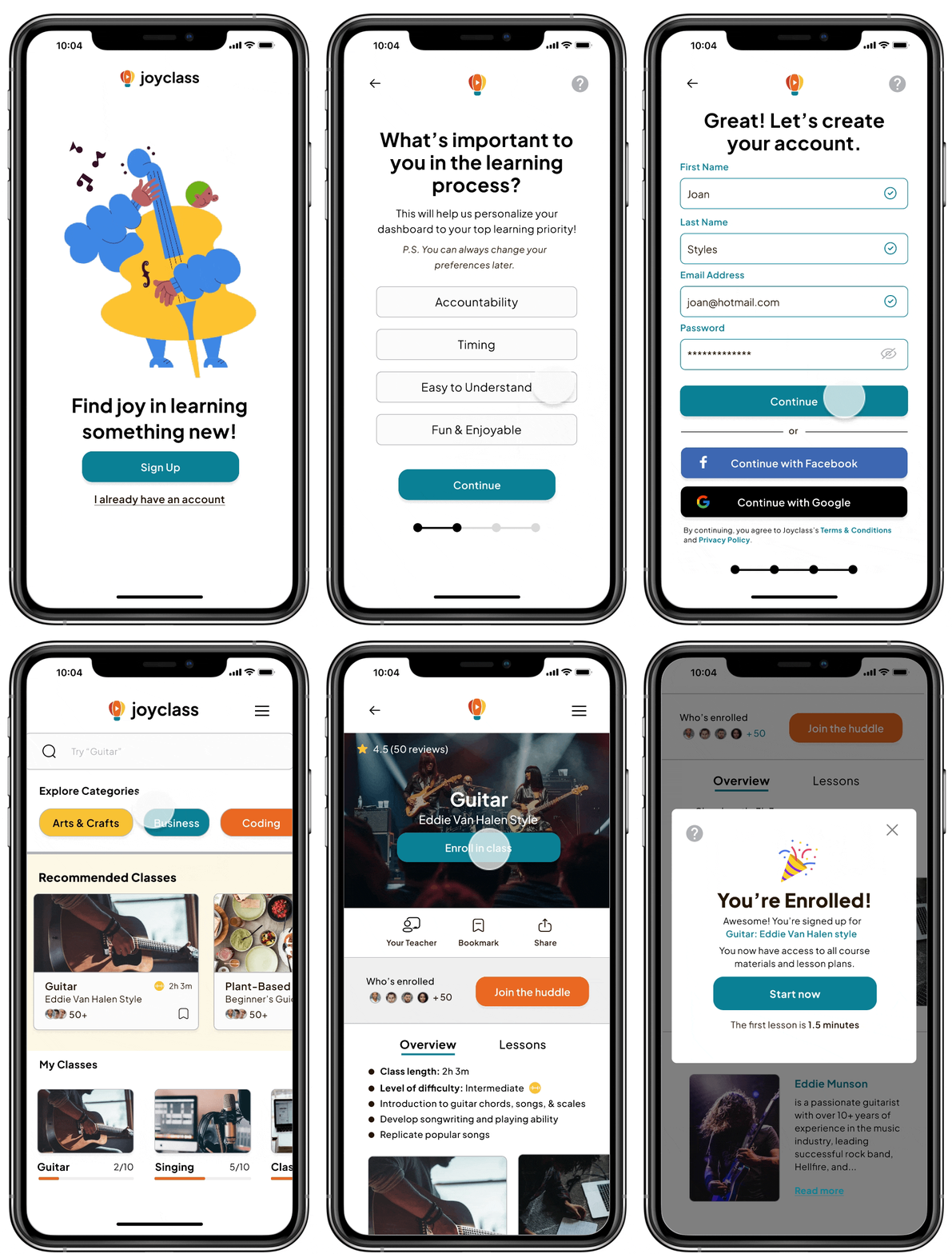
The final solution encapsulates a holistic approach to addressing user feedback and enhancing their overall experience.
The solution addresses the lack of social connection, accountability issues, learning monotony, and time constraints. To combat time concerns, we've integrated short-form video content, delivering impactful information in a time-efficient manner.
Additionally, based on user feedback, we've revamped the user interface to prominently showcase "beginner, intermediate, and advanced" levels, making it easier for users to select and sign up for the courses that best suit their needs.
Problem
Lack of social connection & direction
Accountability issues
Too boring/Not enjoyable enough to learn
Not enough time to learn
Solution
Provide an outlet for learns to connect with others in a "Huddle"
Progress bar to keep users on track for their goals
Encouraging language throughout the app
Short-form video content to address time concerns.
Focusing on a more complex task flow can help solidify & tackle the problems at hand.
I did my user flows on onboarding and enrolling in a class and therefore user research was limited to these two flows. To really tackle the problem of social connection, I would have done a task flow on "joining a huddle".
Refer back to personas, task & user flows during the design process.
I could improve on referring back to my personas to get a better idea of my users and keep them in mind when designing.